What Are Exosomes?
Exosomes are microscopic extracellular vesicles naturally released by cells. They carry proteins, lipids and genetic material that help cells communicate with one another.
Scientists are studying how this natural communication system may support tissue repair, regeneration and overall cellular health.
Why Are Exosomes Important?
Researchers are exploring exosome signalling across several areas of regenerative and aesthetic wellness.
-
Skin Health: Supports collagen production and skin rejuvenation.
-
Hair Health: Encourages healthy follicle signaling.
-
Tissue Repair: Plays a role in wound healing and recovery.
-
Cellular Communication: Helps coordinate biological processes throughout the body.
How Exosomes Work
A simple view of how these natural messengers may help cells share biological signals.
-
1
Healthy Cell
A living cell prepares and packages signaling cargo.
-
2
Releases Exosomes
Tiny vesicles are released into the surrounding environment.
-
3
Deliver Signals
Exosomes carry proteins, lipids and genetic material to other cells.
-
4
Cells Respond
Recipient cells receive the message and may adjust their activity.
Current Areas of Research
Exosomes are currently being studied across dermatology, regenerative medicine, wound healing, orthopaedics, hair restoration and targeted drug delivery. Research is ongoing and continues to evolve.
- Dermatology
- Regenerative Medicine
- Wound Healing
- Orthopaedics
- Hair Restoration
- Targeted Drug Delivery
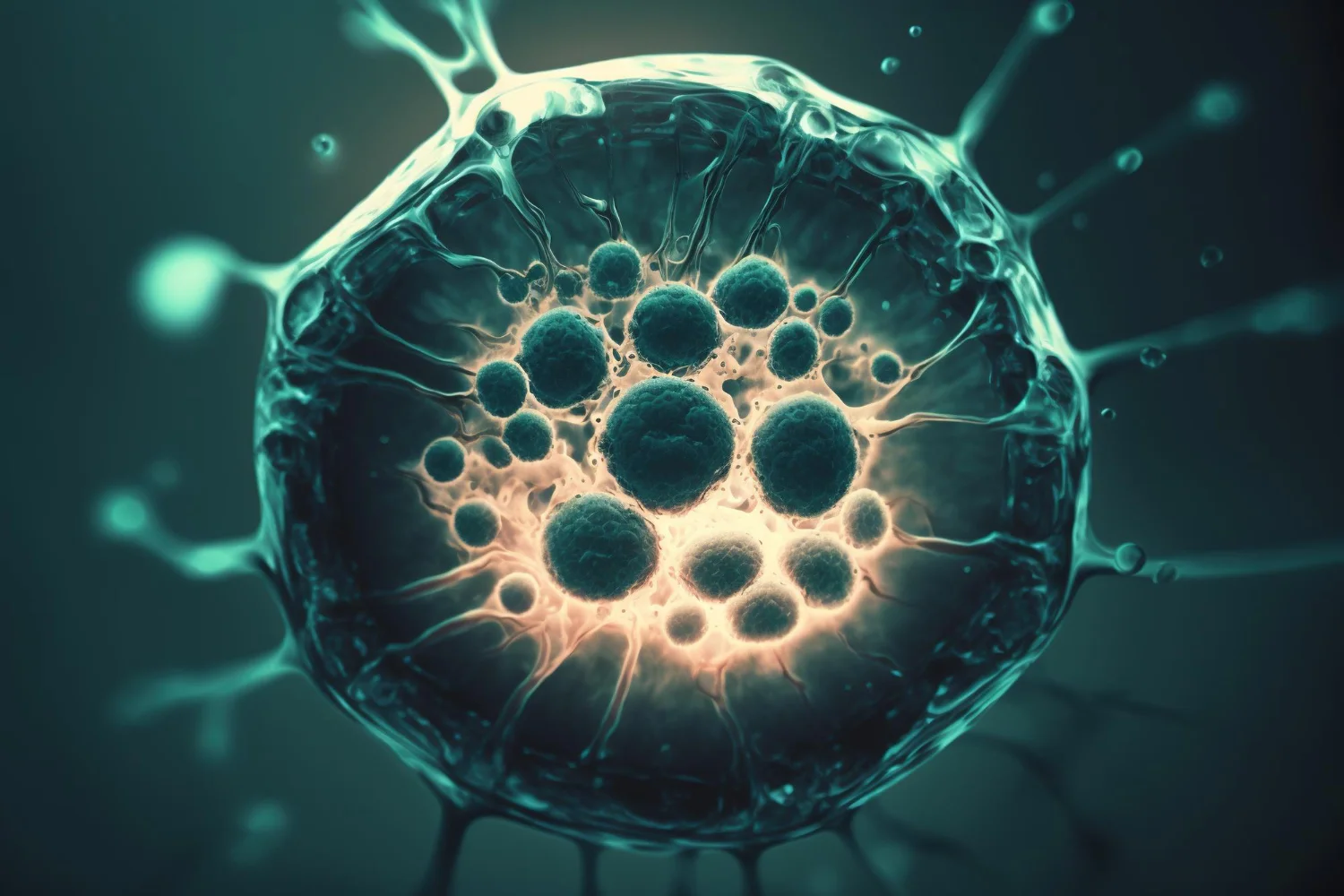
Early studies are also exploring how exosome biology may relate to environmental challenges such as microplastic exposure.
-
Current Research
Growing study of exosome-microplastic interactions
-
Biological Mechanisms
How vesicles may transport particles within cells
-
Exosome Roles
Potential binding and neutralisation pathways
-
Known Approaches
Investigational filtration and clearance concepts
-
Future Innovation
Engineered vesicles for more targeted research uses
Clinical Applications
In aesthetic and regenerative medicine, practitioners commonly discuss exosome-related approaches for:
-
Skin rejuvenation
Supporting a fresher look and healthier-feeling skin.
-
Scar management
Discussed in the context of recovery and skin texture.
-
Pigmentation
Explored for more even-looking skin tone.
-
Acne recovery
Often considered as part of post-acne care conversations.
-
Hair restoration
Linked with follicle signalling and scalp wellness discussions.
-
Improved skin texture
Focused on smoothness, resilience and overall quality.
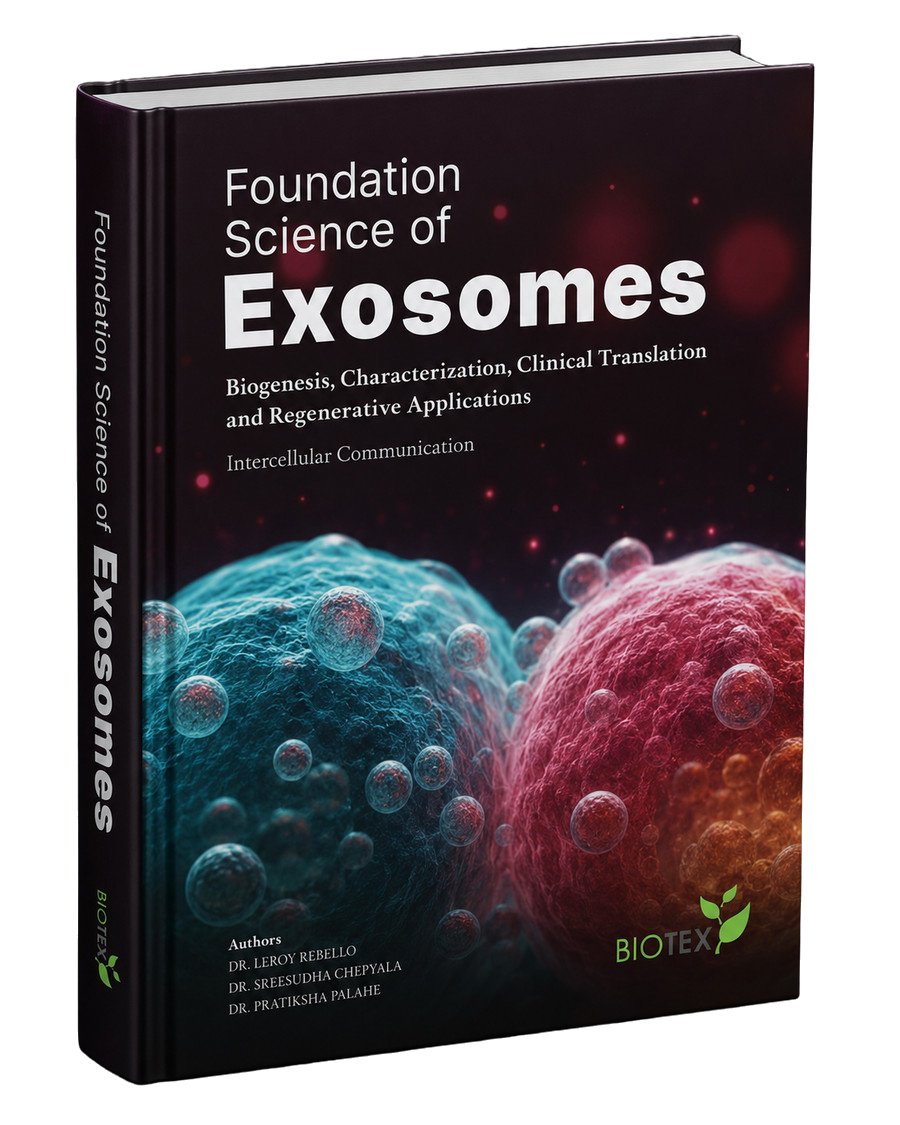
Foundation Science of Exosomes
Biogenesis, Characterization, Clinical Translation and Regenerative Applications
Dr. Leroy Rebello, Dr. Sreesudha Chepyala, Dr. Pratiksha Palahe
A comprehensive scientific textbook on extracellular vesicle biology - covering the complete spectrum from molecular mechanisms to clinical translation. Written for postgraduate students, clinicians, researchers, and biotechnology professionals in regenerative medicine, diagnostics, and biomedical product development.
What this book covers (9 chapters)
- What Exosomes Are and Why They Matter Structural anatomy, lipidomic membrane dynamics, extracellular particle classification
- Historical Evolution of Exosome Biology From platelet dust to MISEV2023 guidelines and modern translational kits
- Biogenesis and Secretion of Exosomes ESCRT pathways, MVB formation, intraluminal vesicle release mechanisms
- Cargo Sorting, Molecular Packaging, and Composition Proteins, RNA, DNA, lipids, post-translational modifications, proteomics
- Isolation, Enrichment, Characterization, and Quality Control Pre-analytics, orthogonal characterization, functional assays, MISEV2018/2023 standards
- Biodistribution and Routes of Administration Organotropism, integrin code, blood-brain barrier, therapeutic design implications
- Exosomes in Normal Physiology Hematopoiesis, CNS, cardiovascular, reproductive biology, stem cell niches
- Disease Biology and Regenerative Applications Cancer, neurodegeneration, inflammation, wound healing, MSC-derived exosome therapy
- Diagnostics, Therapeutic Engineering, and Regulatory Translation Liquid biopsy, therapeutic engineering, GMP manufacturing, FDA/EMA regulatory pathways
Aligned with MISEV2018 and MISEV2023 (ISEV)
Treatment Journey
A typical pathway from first conversation through follow-up care.
-
Consultation
Discuss goals, history and expectations with a qualified clinician.
-
Assessment
Review suitability and any factors that may influence care.
-
Treatment Planning
Agree on an approach tailored to your needs and setting.
-
Exosome Application
The clinician carries out the planned application protocol.
-
Recovery
Follow aftercare guidance; downtime is often limited, depending on the protocol.
-
Follow-up
Review progress and decide on any further sessions if appropriate.

Meet Dr. Janaira Kumari
Clinical Expert on Biotex Autologous Exosome Therapy
-
MD, Fellowship in Nutritional & Environmental Medicine (FINEM)
-
Harvard-trained in Lifestyle & Wellness Coaching, Nutrition & Sustainable Diet Planning
-
Scientific Board Lead – Regenerative Medicine Portfolio (SAAaRMM, Malaysia)
-
Certified Nutrigenetic Consultant – Eplimo (Personalised genetic-based nutrition & lifestyle plans)
-
Member – Malaysian Society of Lifestyle Medicine (MSLM)
-
Lifetime Member – MAAFiM (Functional & Integrative Medicine)
-
International Consultant – Mirakle Integrated Cancer Health Care Centre (India)
Dr. Janaira Kumari brings together regenerative medicine, lifestyle medicine and professional education.
She guides clinicians through the science and practical protocols of exosome therapy, helping healthcare professionals build confidence as they integrate regenerative approaches into everyday practice.
Biotex Professional Exosome Course
Learn directly from Dr. Janaira Kumari through Biotex's comprehensive Exosome Therapy programme.
Designed for healthcare professionals, the course combines scientific foundations with practical clinical protocols, helping participants confidently integrate regenerative medicine into their practice.
-
Scientific Foundations
-
Clinical Applications
-
Treatment Protocols
-
Case Discussions
-
Hands-on Demonstrations
-
Certificate of Completion
Who Should Attend?
The programme is suitable for professionals interested in regenerative medicine education.
- Doctors
- Dermatologists
- Dentists
- Aesthetic Physicians
- Wellness Practitioners
- Healthcare Professionals interested in regenerative medicine
Why Learn with Biotex?
-
1
Expert-led training
Learn from experienced educators in regenerative and lifestyle medicine.
-
2
Evidence-informed curriculum
Content grounded in scientific foundations and evolving research.
-
3
Practical clinical insights
Protocols and case discussions designed for real-world settings.
-
4
Ongoing learning support
Continue the conversation beyond the classroom session.
-
5
Industry-focused approach
Built for clinicians integrating regenerative care into practice.
Frequently Asked Questions
-
What are exosomes?
Exosomes are microscopic extracellular vesicles naturally released by cells. They carry proteins, lipids and genetic material that help cells communicate with one another.
-
Is the treatment painful?
Most people describe mild discomfort depending on the application method used by the clinician. Your practitioner can explain what to expect for the specific protocol being considered.
-
Is there any downtime?
Downtime is often limited, but it varies with the treatment approach and individual response. Your clinician will advise on aftercare and when you can resume usual activities.
-
How many sessions are typically recommended?
The number of sessions depends on your goals, assessment findings and the protocol your clinician recommends. A personalised plan is usually discussed during consultation.
-
Who is a suitable candidate?
Suitability is determined case by case after a medical consultation. Generally, adults seeking regenerative or aesthetic wellness options may be assessed for appropriateness.
-
Are there any contraindications?
Certain medical conditions, medications or recent procedures may mean treatment is not advised. Always share your full health history so a qualified clinician can assess contraindications.
Interested in learning more about our Exosome Therapy programme? Contact us today to schedule a consultation or training session.
Send us your details and our team will get back to you about the course, consultations or training sessions.
Exosome Research
-
Autologous Exosomes for Human Therapeutics: Biological Basis, Isolation Methodologies, Kit Development, and Translational Requirements
-
Exosomes in Hepatocyte Repair and Liver Regeneration: Biological Mechanisms, Autologous Strategies, and Translational Evidence
-
Autologous Exosomes and Extracellular Vesicles in Skin Health and Rejuvenation: Biological Mechanisms, Clinical Evidence, Translational Challenges, and the Biotex Autologous Exosome Isolation Kit Structured Narrative Review
-
Autologous Blood-Derived Extracellular Vesicles (Exosomes) For Nebulized Respiratory-Tract Delivery: From Point-Of-Care Isolation to Upper-Airway and Pulmonary Regenerative Signaling
 View Research Paper